
Your search for * has returned 100 entries
achachadaliek
adj. tempestuous at sea
bookmarkacrac
baby crawling
bookmarkafwafwa
n. beat coconut fiber
bookmarkanaclelen
n. forecast
bookmarkaraparap
n. sunset
bookmarkatcatcaiyu
v. to emit sound from a bottle or coconut
bookmarkategnaijaig pok nelcau
v.n. sail from shore
bookmarkededel
n. spring
bookmarkelelehel
wind blowing
bookmarkEt elwa intisiaicai
phr. the flowers are come out.
bookmarkethanethan
adj. at a distance; on the other side of the road.
bookmarketi laulau
adv. soon
bookmarkfetofeto
fetofeto
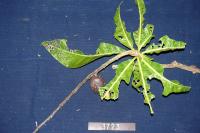
girigiri
n. coconut basket
bookmarkigcaijai
n. a place up or eastward
bookmarkincai upunupun
n. bramble
bookmarkincatyatou
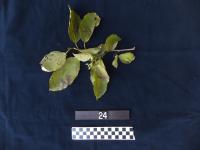
n. tree. Acting as a fence post. (collection: Ashley A McGuigan #24)
Example: 1. For vomiting/uneasyness - remove the bark of a stem and take the inner bark (this should be white). Smash the white bark with about 150ml of cold water and drink. The bark can also be boiled and cooled down to drink cold. Believes when you vomit a lot this will restore your body and give you energy again. Take after vomiting but can use even when not sick. 2. For stomache ache - Can also be prepare and taken as in part 1. 3. For painful urination, also prepared as in part 1. 4. The fruits are sticky and used as a type of local “glue.” Collect the fruits when ripe, hold the outside of the fruit in the hand, and put the end of the fruit that has the sticky sap on paper or anything else needing to be glued. In ancient times, this sticky glue helped join the strings together that were used to make a long fishing line. 5. In ancient times this sticky glue helped join the strings together when making a long one for fishing. 6. During the heat of the day, in the hot season, take inner bark from 1 stick, scrape bark into 1 liter water and drink all day to help prevent a person from getting urinary infection, resulting in painful urination from being in the sun too much. 7. If you put the leaves of this plant in a bag with your fishing gear – it will help catch a lot of fish – magic. 8. Cut a 1-2 m long branch in each of 4 corners of the garden which is a rectangle, place it in an “X” at each corner, this will cleanse people who have not been cleansed who come in the garden. 9. If a person is not cleansed e.g. has not fasted from certain foods, the crops will not bear good fruits. So when gardening, people believe it is best not to eat coconut, shellfish, fish, stay away from sex, and no fermented food like breadfruit and bananas, OR if you have a visitor overnight and then you heal to cleanse yourself before going to the garden. After a woman finishes her period, she will stay out of garden for 10 days, this is specifically for kava, water taro, sugarcane and yam in the garden. Other crops – cassava, sweet potato, and taro Fiji are okay. Different Kastom for N, S, W, E people – so this Kastom is for South and Eastern people.
bookmarkinciñyiñpa
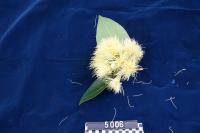
inhachac
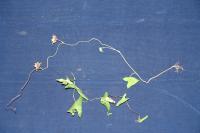
injedete anawanarin
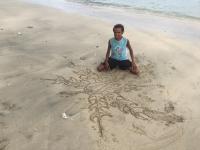
injupjupura
n. night; quite dark
bookmarkinligighap
n. the thick end of a coconut leaf used as a target
bookmarkinmadeded
n. kind of tree
bookmarkinmadidi
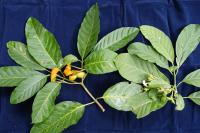
n. tree to 5 m, dbh 8 cm (collection: Michael J. Balick #4855)
Example: To treat a flu that has resulted in a thick, runny nose, collect sap of this tree, drink 2-3 drops directly (not in water). This is for treating the type of flu that provokes yellow mucus coming out of the nose. Drinking the sap breaks up the stuffy nose. Use once, it tastes very sour. In 3-4 days the mucus will be expelled. Do not use too much! If a person has a new cut, and the bleeding will not stop, place the sap on the cut and the bleeding will stop. If you have a burn that is bleeding, applying the sap will stop the blood and oozing sore. If a person has a sore on their body, cover it with a layer of the sap from this plant. This will ensure that the sore will not get larger from infection, flies, etc. but stay its original size. This plant is also used for unspecified spiritual practices. To determine if a fish you have caught is poisonous, e.g. with ciguatera, take an 8’ piece of small branch from this tree, peel the bark and put it inside the fish before you cook it on the earth oven. If the stick turns black, then you know that the fish is not good to eat--it has a poison so should be thrown away.
bookmarkinmadidi
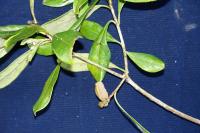
n. tree to 7 m, dbh 30 com (collection: Michael J. Balick #4870)
Example: This plant is used for spiritual purposes. When fruits are young, the children take the fruit, cut it open and take coconut leaf midribs, impaling the seeds on the midribs and painting themselves with the fruit.
bookmarkinpecelelcei paralelcei
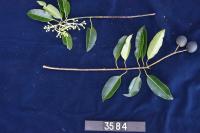
n. tree, 18-20 m tall (collection: Gregory M. Plunkett #3584)
Example: The young stems of this tree are very light, and used to make spears for fishing--they float. The stems are used to make the poles that connect the outrigger to the canoe. Good to make a fishing spear with as with others, timber. Leaves used with other plants to heal a sick woman who is sick from a male spirit – PARALELCEI – This lead with other leaves unspecified, tie together pound juice out of it and put juice in bamboo, cover top w/ wild cane leaf and take to sick woman before sunset, give to her to drink, before wave bamboo around her, open it and pour a bit on her head and drink a bit and wash her face, then break bamboo and discard it before sunset. Then tell spirit to go away. Symptoms such as a miscarriage or continued period, or dream and see the male spirit, or dream of snakes from the forest.
bookmarkinpotaliglighap
n. the thick end of a coconut leaf, used as a mark for throwing spears at; also "inpotin lilighap"
bookmarkintaeñtaeñ atamaeñ
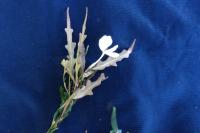
intinan
n. a bed, a foundation, a plantation
bookmarkintinan nopoi
n. the wicker-work bed (constellation?)
bookmarkintinan tal
n. a plantation of taro
bookmarkjupmulmul
n. the cool of the evening
bookmarkkopilkopil
n. kind of taro
bookmarkmuri muri
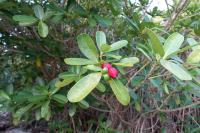
muri muri
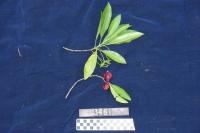
nafakaka
n. a blossom; the spathe of a coconut used as light; also "nafaketa"
bookmarknamarere
n. kind of sugarcane
bookmarknamniañia
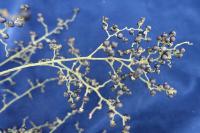
namotmot
n. grass; also "namutmut"
bookmarknanad
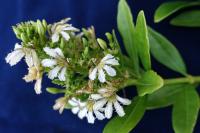
nanad
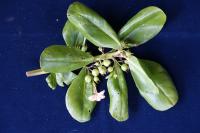
n. shrub, 1 m tall (collection: Gregory M. Plunkett #3553)
Example: 1. A stimulant plant. If a person is going to their garden early in the morning before the sun come up, break 2 top young leaves and chew and swallow the liquid, spitting out the fiber. This makes the person able to work harder and not feel tired while in the fields. It was noted that "a person can do the work of many people if they chew this." 2. The leaves are used for fertilizer for taro--put a bunch of leaves in a hole were taro is to be planted as a compost/antibiotic. This practice is said to kill all of the bad organisms such as bacttively impact the health of the taro plant. 3. This one collected from coastal area, ?? one collected in forest area. People take 4 leaves, chew leaves, swallow juice, gives energy to work hard the entire day. For fishing, take lots of ripe fruits and put in pocket, you will be able to catch a lot of fish. It brings good fortune when fishing. Roots – take one root, wash where a woman is giving birth to a newborn baby, give a drop of the juice from the root to clear the mucus in the throat.
bookmarknanad cop̃ou
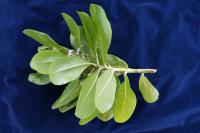
n. small shrub, 0. 5 m tall (collection: Gregory M. Plunkett #3219)
Example: 1. A stimulant plant. If a person is going to their garden early in the morning before the sun come up, break 2 top young leaves and chew and swallow the liquid, spitting out the fiber. This makes the person able to work harder and not feel tired while in the fields. It was noted that "a person can do the work of many people if they chew this." 2. The leaves are used for fertilizer for taro--put a bunch of leaves in a hole were taro is to be planted as a compost/antibiotic. This practice is said to kill all of the bad organisms such as bacttively impact the health of the taro plant. 3. This species is collected in the coastal areas, and is different from the one that looks similar to it, that grows in the forested areas. People take 4 leaves, chew leaves, swallow juice, gives energy to work hard the entire day. For fishing, take lots of ripe fruits and put in pocket, you will be able to catch a lot of fish. It brings good fortune when fishing. Roots – take one root, wash where a woman is giving birth to a newborn baby, give a drop of the juice from the root to clear the mucus in the throat.
bookmarknanini
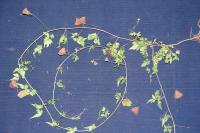
napaeicei
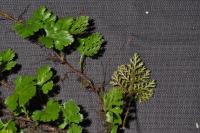
natau anyiyi
n. kind of banana
bookmarknauwau
n. a bulrush; a flag
bookmarknefelelicai
n. grass; weeds; thistle
bookmarknegaivaine
n. a bunch of grapes; also "nigaivaine"
bookmarknegrecreipek
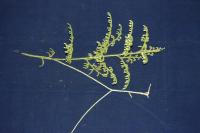
nehtet upaipai
n. kind of sugarcane
bookmarknejecjec
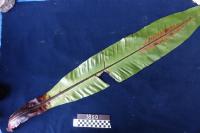
n. epiphyte c. 1 m above forest floor, growing in secondary forest above river. (collection: Gregory M. Plunkett #3650)
Example: The younger,soft leaves are used to wrap local foods, for example bananas. To prepare a type of "local cheese," made from fermented breadfruit and fermented banana, mix a bit of coconut milk and wrap these two fruits in the leaves and cook under ground. Not clear about the way the food is fermented.
bookmark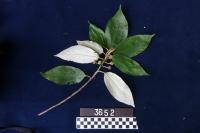
nekinkin
n. kind of plant, grass, or fern
bookmarknepigpig
n. before daylight
bookmarknepjenepjen
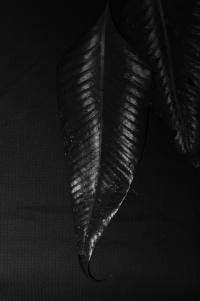
n. epiphytic vine climbing on trees, growing in dense rainforest. (collection: Gregory M. Plunkett #4091)
Example: 1. When a child is between 1 mos. and 1 yr. if the father persists too soon in resuming sexual relations with the mother, the child can become sick. In preparation for the sickness, green leaves are collected. When the sickness occurs, the leaves (now dry) are burned and the baby is washed with the charcoal. 2. After visitors leaves one’s house, one must not hurry to return to their gardens. One waits a few days, then swims with the rachis of this fern tied about their waist. If this practice is not followed, it is believed that the plants in one’s gardens will grow weak.
bookmarknerere
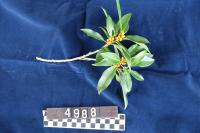
n. tree to 10 m, dbh 75 cm (collection: Michael J. Balick #4988)
Example: The young aerial roots are cut from the stems of the tree and used as a local rope, to tie things, help construct temporary shelters, as well as to make string for a hunting bow. Flying foxes like to eat this fruit so in the night when the fruit is mature hunters come by this tree to hunt flying foxes as well as hunting birds during the day. Hunters use bows and arrows for birds, and throwing sticks (natou) made from any plant to hunt flying foxes.
bookmarknetcetas
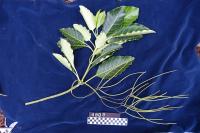
netemu or nidwumnumu
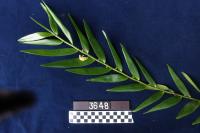
netethae
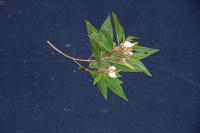
n. shrub, 1. 5 m tall (collection: Gregory M. Plunkett #3604)
Example: The fruits are edible when ripe--eating them turns the tongue purple. 1. To cure headaches - Someone other than the woman must prepare this. Break the top branch of netethae and remove leaves for use. Combine with the top leaves of the top branch of nelmaha. Chew the leaves and drink the juice. Do this when the sun is setting on the horizon. The woman gives the leftover fibers to the person who prepared the medicine and that person goes and throws the fibers in the direction of the setting sun. 2. Ancestors 4 top branches and chew and spit out remaining fiber will destroy the effects of a love potion that is too strong – meaning that the husband or wife will miss the other person too much so that they become mentally ill. 3. Edible fruits: eating them turns tongue black/purple.
bookmarknidid
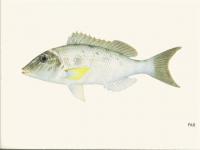
n. Ambon emperor
Example: Photo by FAO / Fishbase, License: CC BY-NC 3.0 via Fishes of Australia
bookmarknirinat erefera ran
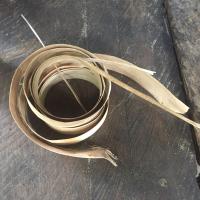
nitit a nelgo waj
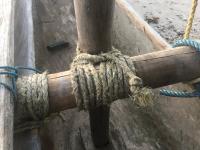
nititan
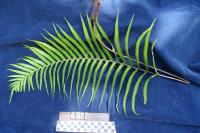
n. fern to 0. 75 m, sori brown. growing along trail. (collection: Michael J. Balick #4972)
Example: The fronds of this fern are used to wrap sting ray and shark meat, which have a great deal of moisture in them, for cooking on the earth overn. Wrap the fronds (leaves) around the meat and tie with a Pandanus string. Because they are not thick, broad, entire leaves, but rather have many places in them where water can drain out during the cooking process, it is said that these leaves are much better for preparing these two types of fish, as well as any other meat that contains a great deal of moisture. For cooking on the earth over, put these wrapped foods on top of any other leaves so that they do not touch the hot stones directly, and then cover with other leaves as well. Then place the hot stones on top of these wrapped meats.
bookmarknokoko
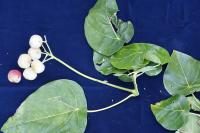
n. tree, 3-4 m tall (collection: Gregory M. Plunkett #3540)
Example: The straight trunk of this tree is used to make canoes. The black seed in the fruit is used to make necklaces. The inner bark is peeled and crushed in sea water and rubbed in the hair to make it curly. People do this treatment every day to make long hair curl like a rasta.
bookmarknomotmot tucjup
n. kind of plant, grass, or fern
bookmarknononhat
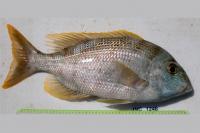
n. Blue-lined large-eye bream
Example: Photo by Jean-Lou Justine / Wikimedia Commons, License: CC BY-SA 3.0 via Fishes of Australia
bookmarknuhihialeg
n. the early morning
bookmarknumurumu
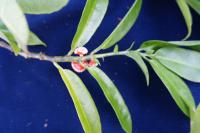
nuputuligighap
n. stem of coconut leaf
bookmarknuripapa
n. wind-related term; no definition provided
bookmarkrere
adj. leafless; fading
bookmarksafenunui
n. kind of taro
bookmarktarere
adv. near; inshore; near the shore
bookmarktatau
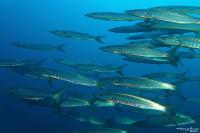
n. Bigeye barracuda
Example: Photo by Philippe Guillaume, License: CC BY-NC 3.0 via Fishes of Australia
bookmarktatau
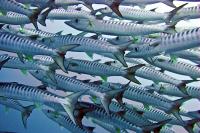
n. Blackfin barracuda
Example: Photo by Jan Messersmith, License: CC BY-SA 3.0 via Fishes of Australia
bookmarktatau
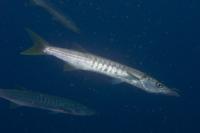
n. Pickhandle barracuda
Example: Photo by Mark Rosenstein / iNaturalist.org, License: CC BY-SA 3.0 via Fishes of Australia
bookmarktatau
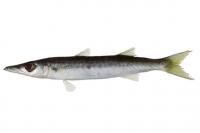
n. Yellowtail barracuda
Example: Photo by ANFC, License: CC BY-NC 3.0 via Fishes of Australia
bookmarktehtehen
n. blossom (open)
bookmarktehtehin
n. an open blossom
bookmarkucjicjid
v.a. to heap up earth to taro
bookmarkwiwi
n. kind of breadfruit
bookmarkwudwud
n. kind of tree
bookmarkThere are currently 2431 entries, 1543 audio files, and 860 images.
All content copyright © Aneityum community. (2015)
Talking Dictionary produced by K. David Harrison, Gregory D. S. Anderson and Jeremy Fahringer. Botanical consultants: Michael J. Balick, Gregory M. Plunkett and Sean Thackurdeen. (2015-2018)
Aneityum language contributors include Kirk Keitadi, Tony Keith, Titiya Lalep, David Nasauman, Osiani Nerian, Ruben Nerian, Chris Nevehev, Romario Yaufati and others as credited within the dictionary entries. Based in part on materials from Inglis, John (1882) A Dictionary of the Aneityumese Language: In Two Parts. I. Aneityumese and English. II. English.
The Aneityum-English Talking Dictionary was made possible by award no. 1555675 from National Science Foundation for “Collaborative Research: Plant, Fungal and Linguistic Diversity of Tafea Province, Vanuatu.” This support is gratefully acknowledged.
Any opinions, findings, and conclusions or recommendations expressed in this material are those of the author(s) and do not necessarily reflect the views of the National Science Foundation.
All rights reserved. Do not distribute or reproduce without permission.
how to cite:
K. David Harrison. 2015.
Aneityum Talking Dictionary.
Swarthmore College.
http://www.talkingdictionary.org/aneityum
Interface and database design under the direction of Jeremy Fahringer and Swarthmore College ITS.
Supported by