An example search has returned 100 entries
ateucradi se an namilvai
v.n.
bookmarkeceijo
n.
bookmarkecetaig jai
v.
bookmarkereinmerei
n.
bookmarkincai er hegaig
n.
bookmarkincejev ataheñ
incetceianalañ
inholai mobo
injañad
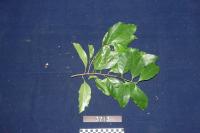
ink
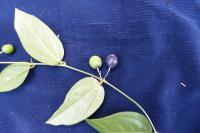
inma
n.
bookmarkinmauwad
n.
bookmark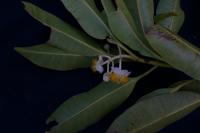
inp̃alanhas
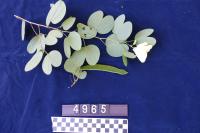
intiklan cai
n.
bookmark
inwah iran
n.
bookmarkinwau an nadiat
n.
bookmarkkorari
lakasia
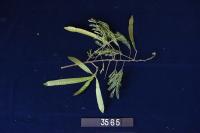
laknu
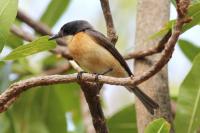
nagagnit
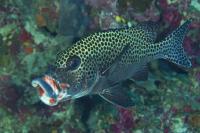
n.
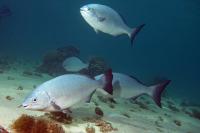
Example: Photo by Mark Rosenstein / iNaturalist.org, License: CC BY-SA 3.0 via Fishes of Australia
bookmarknagai
n.
bookmarknagai has
n.
bookmarknagaihos
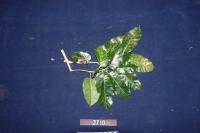
nahanemek
n.
bookmarknala
n.
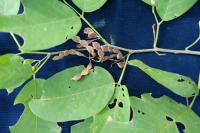
Example: This is a common tree. If a person travels from one district to another on Aneityum, and you see the tree planted in that other district, a person knows they are free to come into this area. When the leaves are yellow, as in a young tree, the local name is nala’gay. If a person carries a branch of this tree into a village it is a symbol that the person is coming with peaceful intentions.
bookmarknalad iran
n.
bookmarknameleahpu
n.
bookmarknamop
n.
bookmarknaop yi atmas
n.
bookmarknapalhat
n.
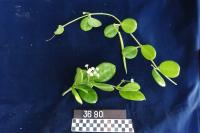
Example: As a medicine to treat toothache, the latex from this vine is put into the tooth as soon as the person feels pain. Use 3x daily until the pain has subsided. The flower is used as a decoration behind the ear. When there are rough seas because someone has trespassed in a tabu area you can take 12 leaves from the napalhat and put them in a pond for about 1 week until they start to stink. Then use we leaves from the naojapdak and drown those leaves in either a fresh water pond or salty water. (No further information given). Can also take an armful of napalhat and place on top of a stone in the tabu area with a smaller stone on top of the napaphat. The stone must be a large permanent stone. Has also heard people say it can be used for toothache if you put the leaf on the tooth.
bookmarknapojev
napudve
n.
bookmarknariramteh
n.
bookmarknasiaij
n.
bookmarknatapin
n.
bookmarknau hos
n.
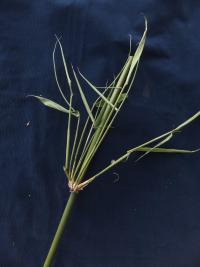
Example: 1. To cure the sea snake (nispev) curse that causes missed periods. First the husband must combine 4 young leaves of incispev and 4 young leaves of nafanu and mash and squeeze the juice into a small bamboo (1-1.5 inch diameter) The nafanu is important because it is a plant that connects to the sea. Use wildcane leaves cover the bamboo closed. Go to the sick person and unwrap the snake from her. Start from the top and let the woman drink a small part of the potion then wash her with the mixture, making sure to wash head, elbows, knees, feet, and belly. Then take a leaf of naha and break it over the woman’s belly button to break the snake off. Smash the bamboo vessel to pieces. Leave the woman there until the wash dries on her. This takes one whole day and the ceremony in the evening so she can sleep and she must not eat. This ritual is performed by men. 2. To make house walls cut to length desired break stems into straps and weave ??. 3. Use stem to cook foods. 4. Container for carrying water. 5. Take tips and tie together and make a torch to go fishing on the reef, walk with the torch – this is a current practice in the East side. 6. Can cut a piece about 1’ long and sharpen edge and use to skin a green banana. 7. Traditional medicine – can use a small segment as a sort of container to carry the traditional medicine to the patient – for example when prepare a sea snake for remedy, or any medicine – to carry it. 8. Used as a container to preserve seeds such as corn, cucumber, beans and is covered with coconut fiber and put near (above?) the fire where it is dry, and the smoke from the fire will keep insects from attacking the seeds.
bookmarknauad
n.
bookmarknauhoig yi amud an nadiat
n.
bookmarknauwau
n.
bookmarknauyerop
n.
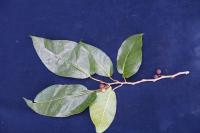
Example: The young leaves are edible, after boiling for 5 minutes. A piece of coconut and a pinch of salt is wrapped in the leaves and eaten. The mature leaves are used to wrap food such as pig or cow meat and cooked in an earth oven. Tie this bundle with a piece of Pandanus fiber to secure it before putting in the earth oven. Both the green and ripe fruits are edible.
bookmarknawa
n.
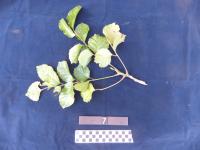
Example: 1. Heat the leaves then place on the sore muscle. 2. Edible plant, cook young leaves until soft and then can eat, as a vegetable or soup, with any food. 3. Same use as AAM 3 to heat and put on body to heal pain. 4. On a reef when it is time to protect the reef to conserve it and bring more fish, you take this plant and put it in the hole in the reef – cut stem and put it in reef in several parts. People will know it is under protection and respect it.
bookmarknecñanjaa
n.
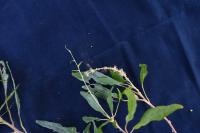
Example: The common name of this plant refers to the footprint of a chicken. Mix the dried leaves of this plant with pieces of coconut and feed to chickens. They are said to really like it. Plant the shrub near the place that chickens are kept. This feed will make the chickens produce more eggs and also increase the number of healthy chickens.
bookmark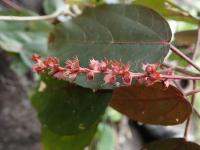
nedjap
n.
bookmarknepig
n.
bookmarknerero
n.
bookmarknerophat
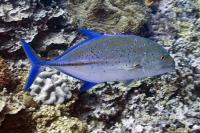
n.
Example: Photo by Jan Messersmith, License: CC BY-NC-ND 3.0 via Fishes of Australia
bookmarkneyo
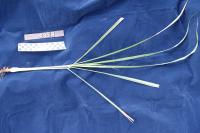
n.
Example: The leaves and stems are boiled in water to make tea. The base of the leaves (the whitish part) is used to cook foods that have a strong odor, such as goat or shark. The base is sliced and put in the soup and this helps to keep the smell of the goat or shark from infusing through the rest of the food and making it less palatable. In some areas of Aneityum, such as in cassava fields, there is a fungus that kills the crops. This species is interplanted with the crops to kill that fungus and protect the crop plants.
bookmarknicvan neaig
n.
bookmarkniducei
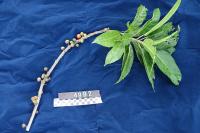
n.
Example: The stems of this plant are good for making temporary houses in the bush. When used as firewood, the stems are said to "hold the fire," meaning they burn a long time, even all night so in the morning the fire can be restarted by adding kindling. This wood is said to be good when a person has no matches, as the fire can be restarted easily. Young leaves of this species can be wrapped around ground coconut and eaten raw. The young leaves can also be boiled in water for 15 minutes, coconut milk added, and eaten with tubers such as cassava. The young leaves can be wrapped around beef or pork, tied with a string from Pandanus and cooked in the earth oven.
bookmarknigirid
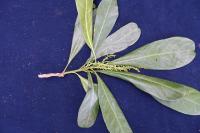
n.
Example: The leaves of this plant are used in cooking, particuarly with the earth oven. Use a fire to heat stones, then when the fire burns down and the stones are hot, pile these leaves on top of the hot stones and then place the food being cooked--taro, fish, pig, cassava, banana or other foods--on top of the leaves. Then pile more of these leaves on top of the food and then place additional hot stones on top of that pile of leaves. While the food is cooking--each type of food takes a different amount of time--the leaves give off a very nice smell and help flavor the food.
bookmarknihpad
n.
bookmarknilupau
n.
bookmarknisalau
n.
bookmark
nispahos
n.
bookmarknitit a nelgo waj
numta
n.
bookmarknuripapa
n.
bookmarkpahai
adj.
bookmarkpak
adj.
bookmarkpassion fruit
n.
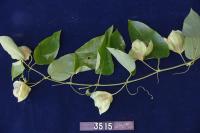
Example: 1. The ripe fruit of this plant is edible. It was introduced to the island and is considered a foreign vine. 2. 4 leaves of this and 4 leaves of Annona muricata and boil in water and let get warm and wash children when they have measles and fever. Edible fruit – very sweet.
bookmark
ridiau mayi
n.
bookmarksepamki
adv.
bookmark
wudwud
n.
bookmarkThere are currently 2431 entries, 1543 audio files, and 860 images.
All content copyright © Aneityum community. (2015)
Talking Dictionary produced by K. David Harrison, Gregory D. S. Anderson and Jeremy Fahringer. Botanical consultants: Michael J. Balick, Gregory M. Plunkett and Sean Thackurdeen. (2015-2018)
Aneityum language contributors include Kirk Keitadi, Tony Keith, Titiya Lalep, David Nasauman, Osiani Nerian, Ruben Nerian, Chris Nevehev, Romario Yaufati and others as credited within the dictionary entries. Based in part on materials from Inglis, John (1882) A Dictionary of the Aneityumese Language: In Two Parts. I. Aneityumese and English. II. English.
The Aneityum-English Talking Dictionary was made possible by award no. 1555675 from National Science Foundation for “Collaborative Research: Plant, Fungal and Linguistic Diversity of Tafea Province, Vanuatu.” This support is gratefully acknowledged.
Any opinions, findings, and conclusions or recommendations expressed in this material are those of the author(s) and do not necessarily reflect the views of the National Science Foundation.
All rights reserved. Do not distribute or reproduce without permission.
how to cite:
K. David Harrison. 2015.
Aneityum Talking Dictionary.
Swarthmore College.
http://www.talkingdictionary.org/aneityum
Interface and database design under the direction of Jeremy Fahringer and Swarthmore College ITS.
Supported by