
An example search has returned 100 entries
aiyu
adj. sweet; shady
bookmarkatcatcaiyu
v. to emit sound from a bottle or coconut
bookmarkategnaijaig pok nelcau
v.n. sail from shore
bookmark
incatyatou
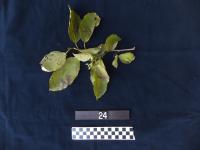
n. tree. Acting as a fence post. (collection: Ashley A McGuigan #24)
Example: 1. For vomiting/uneasyness - remove the bark of a stem and take the inner bark (this should be white). Smash the white bark with about 150ml of cold water and drink. The bark can also be boiled and cooled down to drink cold. Believes when you vomit a lot this will restore your body and give you energy again. Take after vomiting but can use even when not sick. 2. For stomache ache - Can also be prepare and taken as in part 1. 3. For painful urination, also prepared as in part 1. 4. The fruits are sticky and used as a type of local “glue.” Collect the fruits when ripe, hold the outside of the fruit in the hand, and put the end of the fruit that has the sticky sap on paper or anything else needing to be glued. In ancient times, this sticky glue helped join the strings together that were used to make a long fishing line. 5. In ancient times this sticky glue helped join the strings together when making a long one for fishing. 6. During the heat of the day, in the hot season, take inner bark from 1 stick, scrape bark into 1 liter water and drink all day to help prevent a person from getting urinary infection, resulting in painful urination from being in the sun too much. 7. If you put the leaves of this plant in a bag with your fishing gear – it will help catch a lot of fish – magic. 8. Cut a 1-2 m long branch in each of 4 corners of the garden which is a rectangle, place it in an “X” at each corner, this will cleanse people who have not been cleansed who come in the garden. 9. If a person is not cleansed e.g. has not fasted from certain foods, the crops will not bear good fruits. So when gardening, people believe it is best not to eat coconut, shellfish, fish, stay away from sex, and no fermented food like breadfruit and bananas, OR if you have a visitor overnight and then you heal to cleanse yourself before going to the garden. After a woman finishes her period, she will stay out of garden for 10 days, this is specifically for kava, water taro, sugarcane and yam in the garden. Other crops – cassava, sweet potato, and taro Fiji are okay. Different Kastom for N, S, W, E people – so this Kastom is for South and Eastern people.
bookmarkincei imtaig
n. the heart wood of a tree
bookmarkincet edwa
indawoc
inhakli kwori

inharmejicop
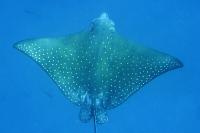
n. Ocellated eagle ray
Example: Photo by Anne Hoggett / Lizard Island Research Station, License: CC BY-SA 3.0 via Fishes of Australia
bookmarkinja
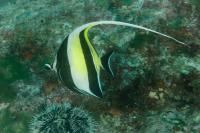
n. Moorish idol
Example: Photo by Ian Shaw / iNaturalist.org, License: CC BY-NC 3.0 via Fishes of Australia
bookmarkinjivij
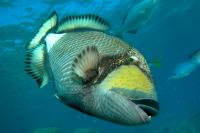
n. Titan triggerfish
Example: Photo by Leonard Low, License: CC BY-NC 3.0 via Fishes of Australia
bookmarkink
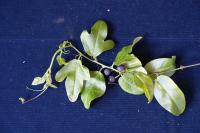
n. vine, growing in coastal forest. Fruits purple. (collection: Gregory M. Plunkett #3556)
Example: A man named Johnnie (Reuben’s grandfather) brought this vine to Aneityum to use it as a rope to tie objects. The ripe fruits are used to paint the face and hands and children make drawings from this dye.
bookmarkinlepei
n. native petticoat
bookmarkinlepei owonp̃oded
inmorantejed
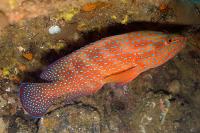
n. Coral hind, coral grouper (deep sea)
Example: Photo by Jan Messersmith, License: CC BY-SA 3.0 via Fishes of Australia
bookmarkinpotaliglighap
n. the thick end of a coconut leaf, used as a mark for throwing spears at; also "inpotin lilighap"
bookmarkintijgejei
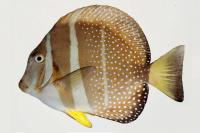
n. Whitespotted surgeonfish
Example: Photo by Jeffrey T. Williams / Smithsonian Institution, License: CC BY-SA 3.0 via Fishes of Australia
bookmarkinwau an nadiat
n. the Milky Way
bookmarkitounga
korari
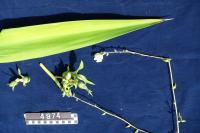
n. herb growing to 2 m tall, flower white (collection: Michael J. Balick #4974)
Example: Put the leaf in seawater for two months, this will rett t he fibers. Then collect the fibrous strings and dry them in the sun, and use them for weaving. In the past this plant fiber was used to make rope but not at present.
bookmarkmetagi asori
n. kind of taro
bookmarknaceijo
n. half tide when rising
bookmarknagereta
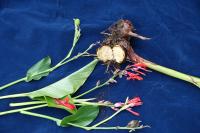
nahoai
n. a plant from which twine is made
bookmarknahoj
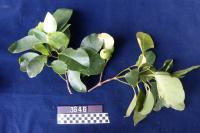
n. tree, 7 m tall (collection: Gregory M. Plunkett #3646)
Example: The ripe fruits of this species smell very nice and people eat the inside part, which tastes similar to a banana. When fruit is ripe the outside is yellow and the inside is purple. The wood can be used for poles to make house rafters. When kids go fishing for shrimps they use the fruit to catch the shrimp by throwing the shrimp into the water which attracts the shrimp.
bookmarknahtancai upunupun
n. thorn
bookmarknamou
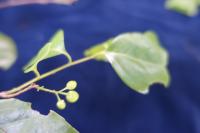
namrad
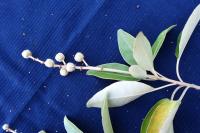
namumuatamag
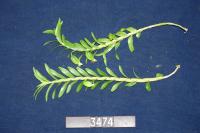
n. epiphyte on fallen tree, growing in disturbed forest. Fruit. (collection: Gregory M. Plunkett #3474)
Example: When children feel weak, this is a good medicine for them. Squeeze the leaves and give the child (3-5 years of age) one tea spoon of the juice and it is said to make them strong again.
bookmarknapalhat
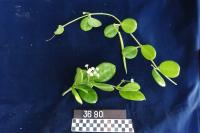
n. vine, growing on rocks at end of strand near coastal forest. (collection: Gregory M. Plunkett #3690)
Example: As a medicine to treat toothache, the latex from this vine is put into the tooth as soon as the person feels pain. Use 3x daily until the pain has subsided. The flower is used as a decoration behind the ear. When there are rough seas because someone has trespassed in a tabu area you can take 12 leaves from the napalhat and put them in a pond for about 1 week until they start to stink. Then use we leaves from the naojapdak and drown those leaves in either a fresh water pond or salty water. (No further information given). Can also take an armful of napalhat and place on top of a stone in the tabu area with a smaller stone on top of the napaphat. The stone must be a large permanent stone. Has also heard people say it can be used for toothache if you put the leaf on the tooth.
bookmarknapuleman
n. kind of banana
bookmarknarasincai
n. bark
bookmarknarecheno
n. kind of plant, grass, or fern
bookmarknatiñpece
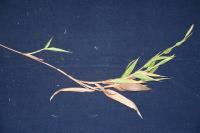
natuh
n. a sweet-smelling plant
bookmarknaupitju
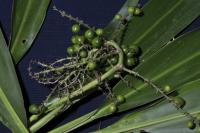
n. treelet, 1 m tall (collection: Gregory M. Plunkett #3622)
Example: People use the leaf of this plant to tie over grated banana, taro or other foods for cooking in an earth oven or boiling in a pot. The root of this species is edible. Cook it for 2-3 nights in an earth oven and then chew and squeeze the juice into your mouth, spitting out the fiber.
bookmarkneau
n. a small water-plant
bookmarknedeij
n. a small gray berry used as beads
bookmarknedenc
n. stinging; the fruit of the kaleteug
bookmarknefetgau
n. kind of sugarcane
bookmarknefilitikgan
n. kind of taro
bookmarkneheptal
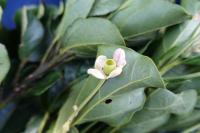
n. tree to 15 m tall, dbh 25 cm (collection: Michael J. Balick #4903)
Example: Wood is used to make canoe as it is very light and lasts in salt water. As a styptic to stop bleeding, when a person gets a cut in the bush, scrape off outer bark and use inner bark scrapings to put on cut. Stops bleeding, leave on for one day.
bookmarknelehel
n. a light wind
bookmarknemered
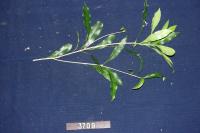
nepekhau
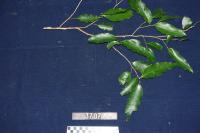
nese
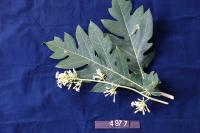
n. herb to 4 m tall, male flowers white (collection: Michael J. Balick #4977)
Example: The fruits are edible and eaten when ripe. To soften beef or octopus, or other meat that is tough, chop green fruit and put in a bowl with meat/fish and then add some water. Allow to sit for 30 minutes or if the food needs to be softer, then leave it in longer. The leaves are used to feed lobsters that are being kept in cages underwater, following their harvest. The leaves are used to cover stones on the earth oven. To treat a person with Ciguatera illness, wash many very gren fruits of papaya, the smallest ones that form at the top, and eat these to help relieve symptoms.
bookmark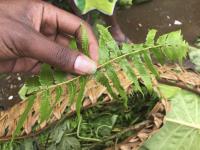
nigie
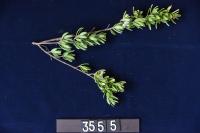
n. shrub, 1-2 m tall (collection: Gregory M. Plunkett #3555)
Example: This plant is an aphrodisiac. Eat with coconut meat to make the body strong. Take 1/2 handful of leaves and mix with coconut leaves, use as needed. Mostly men eat this combination. It is best to eat with dry coconut that has no water in it. Eat it any time you wish.
bookmarknilidie
n. leaves to put food on
bookmarknilyat
n. the name of a tree, the leaves of which blister
bookmarknimtac
n. kind of tree
bookmarknipjid aiyu
n. orange
bookmarknipjinamesei
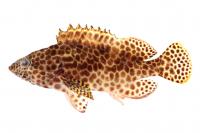
n. Honeycomb grouper
Example: Photo by Jeffrey T. Williams / Smithsonian Institution, License: CC BY-SA 3.0 via Fishes of Australia
bookmarknipʧin njelas
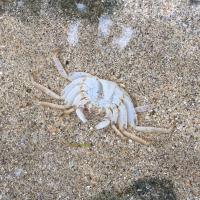
nirinat erefera ran
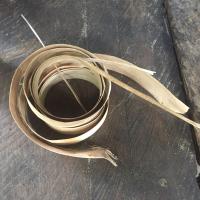
nispak
n. kind of sugarcane
bookmarknitatel (a nelco)
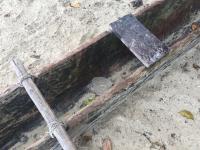
nocirasjau
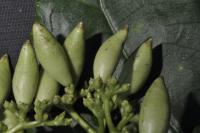
large tree, 13 m tall (collection: Gregory M. Plunkett #4052)
Example: 1. Considered to be a relative of textit{Morinda citrifolia}.
bookmarknohoijam
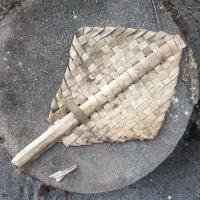
nohos anhas
n. the Futuna banana
bookmarknohos futuna
n. the Futuna banana
bookmarknom̃o
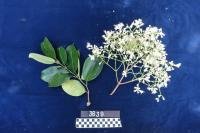
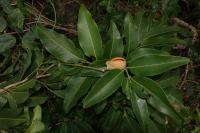
nucye
n. the red star, the "hand" in the constellation Orion; also "necye"
bookmarknuhujcei
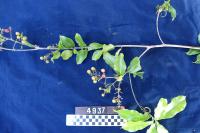
n. vine to 5 m, flower yellow (collection: Michael J. Balick #4937)
Example: In the old days, the hooks of this plant were used as a kind of small fishing hook. Heat the hook over a fire to make it strong, tie a rope to it and use it to catch fish. Take inner bark--1 handful and boil in a full pot of water and wash the body 1x daily to treat scabies. Can work in as soon as 2 days. It cures the sores very fast.
bookmarknup inceen
n. the rib of a leaf
bookmarknusjau
n. kind of sugarcane
bookmarknyihivac
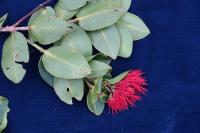
n. tree, 6 m tall (collection: Gregory M. Plunkett #3263)
Example: 1. A "calendar plant". When this flowers in the bush, and people are making their gardens in that area, it means the garden is ready to harvest. 2. Firewood, calendar, and message plant – for people who live up in the forest can see this coastal plant and when it flowers it is a good time to go fishing or to move to the coastal area for a few weeks to relax. July-August. Tide is low so everything is exposed so it is a good time to fish for there, 2 months. 3. Flowers have a nice nectar, sweet, kids drink.
bookmarknälmaha
n. Ficus septica var. cauliflora
bookmarknässa
pak
adj. unripe
bookmarkpokmi
adv. seaward here
bookmarkrohalrohal
adj. rough, applied to sugarcane-leaf thatch
bookmarktilcenayi
n. full moon
bookmarkwakas
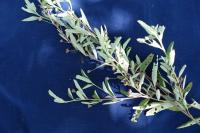
n. herb to 0. 75 m, flowers yellow. (collection: Michael J. Balick #4891)
Example: If a person has the flu, collect the fruits and chew and swallow them. Chew 3 fruits in the morning for 3 days. Take a handful of leaves, still on branches, and boil them in a half liter of water, for 15 minutes. Drink 1 cup daily for 5 days or until the sickness "goes down."
bookmarkwidinahau
n. kind of banana
bookmarkThere are currently 2431 entries, 1543 audio files, and 860 images.
All content copyright © Aneityum community. (2015)
Talking Dictionary produced by K. David Harrison, Gregory D. S. Anderson and Jeremy Fahringer. Botanical consultants: Michael J. Balick, Gregory M. Plunkett and Sean Thackurdeen. (2015-2018)
Aneityum language contributors include Kirk Keitadi, Tony Keith, Titiya Lalep, David Nasauman, Osiani Nerian, Ruben Nerian, Chris Nevehev, Romario Yaufati and others as credited within the dictionary entries. Based in part on materials from Inglis, John (1882) A Dictionary of the Aneityumese Language: In Two Parts. I. Aneityumese and English. II. English.
The Aneityum-English Talking Dictionary was made possible by award no. 1555675 from National Science Foundation for “Collaborative Research: Plant, Fungal and Linguistic Diversity of Tafea Province, Vanuatu.” This support is gratefully acknowledged.
Any opinions, findings, and conclusions or recommendations expressed in this material are those of the author(s) and do not necessarily reflect the views of the National Science Foundation.
All rights reserved. Do not distribute or reproduce without permission.
how to cite:
K. David Harrison. 2015.
Aneityum Talking Dictionary.
Swarthmore College.
http://www.talkingdictionary.org/aneityum
Interface and database design under the direction of Jeremy Fahringer and Swarthmore College ITS.
Supported by