
An example search has returned 100 entries
ahlaujai
v.n.
bookmarkaraho
n.
bookmarkared numta
v.
bookmarkedaledal
v.a.
bookmarkelumai
n.
bookmarkfetofeto
hui heldei
v.n.
bookmarkidi
adj.
bookmarkinceiwad
n.
bookmarkincetceianalañ
inhitilga
n.
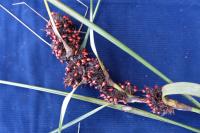
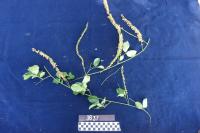
Example: Rope is made from the inner bark of this plant. Use the rope immediately after it is stripped from the bark, there is no need to treat it with heat as is the case with other plants. Alternatively, the coil of bark rope can be kept in fresh water where it will stay soft until needed. Medicine for women when sick with a headache from the spirit sea snake, or sea god, or sea spirit that makes people sick. Men use it to help with toochaches. Women use it to help with backpain, stomache pain, or any other pain. Must pound two leaves taken from the top of the plant and combine with incespiv. Rosalina Nijae said it was mostly used by men so did not know how to use it well. Walking in bush and become thirsty, cut vine on 1 side and drink. Seeds made into foot bracelets for men for Kastom dances and make all sorts of different sounds. In some places taboo to cut large one as the large ones embody the snake spirit.
bookmarkink
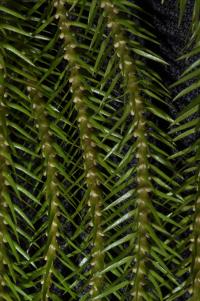
inmadidi
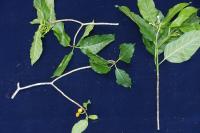
inmauwad itoga
n.
bookmarkinm̃aka
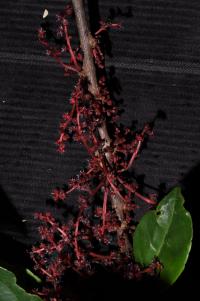
intal milmat
n.
bookmarkinteijid
n.
bookmarkintesyaniau
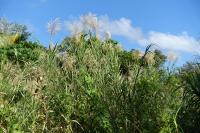
n.
Example: The stem of this plant is used to make walls of houses. Collect the stem and remove the leaves, and then take one of the bush vines (any of them) and tie the stems into bundles for making house walls or fences for chicken pens. Children make a whistle from a hollow piece of stem from this plant.
bookmarkintisianmop
n.
bookmarkinyiivac
inyje
n.
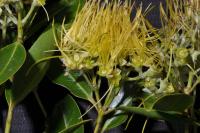
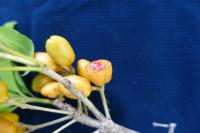
Example: Use the leaves to make compost to be placed at the bottom of the hole where taro is to be planted, cover with soil and grow the taro in that hole. Serves as a fertilizer.
bookmarkkatupinmi
n.
bookmarkkopilkopil
n.
bookmarknadiat jupki
n.
bookmarknadine
n.
bookmarknahanemek
n.
bookmarknai
n.
bookmarknakli pece
n.
bookmarknamaj
n.
bookmarknamaka
n.
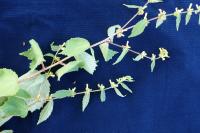
Example: To make rope, cut the stems, tie together in a bundle and place in the sea. Cover the bundle with rocks for about a week, then take it out, wash it, dry in the sun until the fibers bleach white and use to make grass skirts. This is the process of retting. When the cyclone season is finished, the plant has flowers and fruits--in May through July--this means no danger of cyclones.
bookmark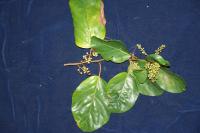
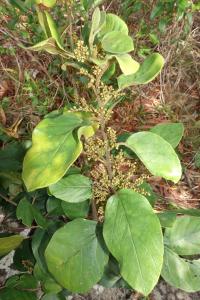
nanad
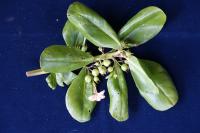
n.
Example: 1. A stimulant plant. If a person is going to their garden early in the morning before the sun come up, break 2 top young leaves and chew and swallow the liquid, spitting out the fiber. This makes the person able to work harder and not feel tired while in the fields. It was noted that "a person can do the work of many people if they chew this." 2. The leaves are used for fertilizer for taro--put a bunch of leaves in a hole were taro is to be planted as a compost/antibiotic. This practice is said to kill all of the bad organisms such as bacttively impact the health of the taro plant. 3. This one collected from coastal area, ?? one collected in forest area. People take 4 leaves, chew leaves, swallow juice, gives energy to work hard the entire day. For fishing, take lots of ripe fruits and put in pocket, you will be able to catch a lot of fish. It brings good fortune when fishing. Roots – take one root, wash where a woman is giving birth to a newborn baby, give a drop of the juice from the root to clear the mucus in the throat.
bookmarknapojev
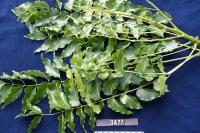
n.
Example: The leaves of this plant are used in cooking, particuarly with the earth oven. Use a fire to heat stones, then when the fire burns down and the stones are hot, pile these leaves on top of the hot stones and then place the food being cooked--taro, fish, pig, cassava, banana or other foods--on top of the leaves. Then pile more of these leaves on top of the food and then place additional hot stones on top of that pile of leaves. While the food is cooking--each type of food takes a different amount of time--the leaves give off a very nice smell and help flavor the food.
bookmarknarecheno
n.
bookmarknasieij
n.
bookmarknasjiramnem
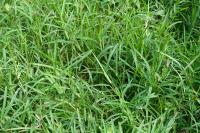
n.
Example: This plant is used to make a medicine to stop bleeding, as a styptic. Squeeze a handful of leaves together and apply the leaves as a poultice to the wound or drip the juice on the wound when it does not seem wise to put pressure on the bleeding. This will stop the blood from flowing from the wound and is only to be used on a small wound.
bookmark
nedenc
n.
bookmarknedwodou
n.
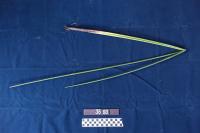
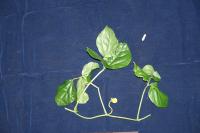
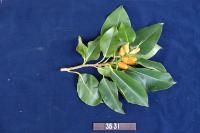
Example: 1. For a child around 1 year of age, take the inside bark, mash it, boil in hot warter and then use it to wash the child. This will ensure that the child will grow strong and make them able to crawl fast. 2. If a woman who is one month pregnant would like to have a baby, she is given 4 of the tips of the branches to chew and swallow everything before breakfast 1x only. 3. For fishing, take 4 leaves, hold top side up, tear right half of leaves off, keep left side, roll it up and put with fishing gear to have good luck when fishing in the deep sea beyond the reef.
bookmarknegna
n.
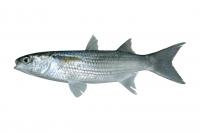
Example: Photo by Biodiversity Institute of Ontario, License: CC BY-SA 3.0 via Fishes of Australia
bookmark
nelean takere
n.
bookmarknepjenepjen

n.
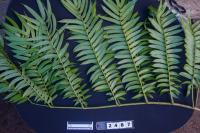
Example: 1. When a child is between 1 mos. and 1 yr. if the father persists too soon in resuming sexual relations with the mother, the child can become sick. In preparation for the sickness, green leaves are collected. When the sickness occurs, the leaves (now dry) are burned and the baby is washed with the charcoal. 2. After visitors leaves one’s house, one must not hurry to return to their gardens. One waits a few days, then swims with the rachis of this fern tied about their waist. If this practice is not followed, it is believed that the plants in one’s gardens will grow weak.
bookmarknepñatimi
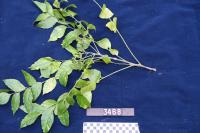
nicasau
n.
bookmark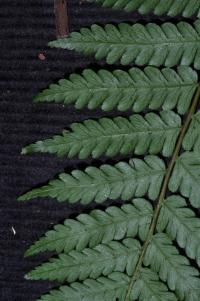
nihpad
n.
bookmarknilpudou
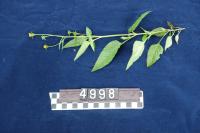
n.
Example: To treat a headache, especially from the flu, boil a handful of leaves in 1 liter of water for a few minutes, let cool and drink 1 cup of liquid per day . Also can treat this type of headache by using the plant in a steam bath, by boiling 4 handfuls of leaves in a pot of water, covering the head with a towel and breathing in the steam from the pot.
bookmarknipnyineuc
n.
bookmarknirinat erefera ran
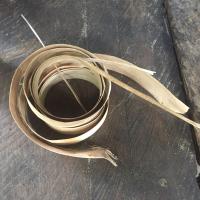
nispahos
n.
bookmarkniyeg
n.
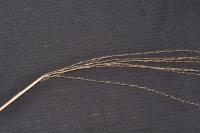
Example: 1. Dried leaves are used to make the thatch roofs of traditional houses. The same leaves are woven to make the walls of traditional houses. 2. When a large torch is required, many dried stems are bundled to form a flambeau. 3. The leaves of this plant are used to demarcate tabu areas. Further information about the practice withheld.
bookmark
numuyehec
pine
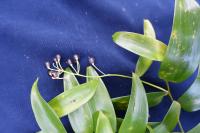
se
adv.
bookmarktatau
n.
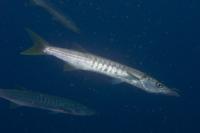
Example: Photo by Mark Rosenstein / iNaturalist.org, License: CC BY-SA 3.0 via Fishes of Australia
bookmarktilcenayi
n.
bookmarkuagas
There are currently 2431 entries, 1543 audio files, and 860 images.
All content copyright © Aneityum community. (2015)
Talking Dictionary produced by K. David Harrison, Gregory D. S. Anderson and Jeremy Fahringer. Botanical consultants: Michael J. Balick, Gregory M. Plunkett and Sean Thackurdeen. (2015-2018)
Aneityum language contributors include Kirk Keitadi, Tony Keith, Titiya Lalep, David Nasauman, Osiani Nerian, Ruben Nerian, Chris Nevehev, Romario Yaufati and others as credited within the dictionary entries. Based in part on materials from Inglis, John (1882) A Dictionary of the Aneityumese Language: In Two Parts. I. Aneityumese and English. II. English.
The Aneityum-English Talking Dictionary was made possible by award no. 1555675 from National Science Foundation for “Collaborative Research: Plant, Fungal and Linguistic Diversity of Tafea Province, Vanuatu.” This support is gratefully acknowledged.
Any opinions, findings, and conclusions or recommendations expressed in this material are those of the author(s) and do not necessarily reflect the views of the National Science Foundation.
All rights reserved. Do not distribute or reproduce without permission.
how to cite:
K. David Harrison. 2015.
Aneityum Talking Dictionary.
Swarthmore College.
http://www.talkingdictionary.org/aneityum
Interface and database design under the direction of Jeremy Fahringer and Swarthmore College ITS.
Supported by