
An example search has returned 100 entries
daute
n. kind of banana
bookmarkelum
v. to begin to form, as fruit
bookmarketcei nohon
n. beat coconut fiber
bookmarkhogelcou
n. royal albatross
bookmarkigca pam
phr. on this side
bookmarkigca pau
phr. on that side
bookmarkigcapahai
adj. inland
bookmarkigcapok
n. seaward
bookmarkimtiat
incei franse
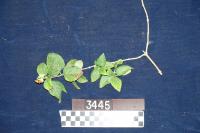
incetevak
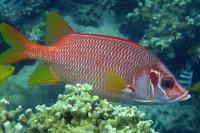
n. Sabre squirrelfish
Example: Photo by Andy A. Lewis / Lizard Island Research Station, License: CC BY-SA 3.0 via Fishes of Australia
bookmark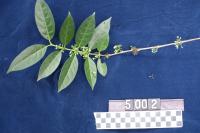
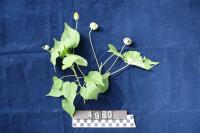
inmauwad
n. a convolvulus
bookmarkinmauwad itoga
n. a foreign convolvulus
bookmarkintal athunwai
n. kind of taro
bookmarkintiklancai
n. sprig
bookmarkintinan tal
n. a plantation of taro
bookmarklaulau
adj. long, applied to time
bookmarkmaputu-ligighap
n. the stem of a coconut leaf used for a butt
bookmarkmedipmedip
n. kind of breadfruit
bookmarkmure
adj. ripe, as arrowroot; also "murre"
bookmarknadi adiat upni
naerumãn
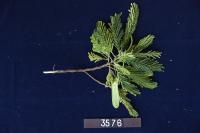
najeng
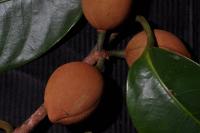
n. tree, 8-10 m tall (collection: Gregory M. Plunkett #4017)
Example: 1. Aerial roots have a natural curve that allows them to be used as a clothing hanger. The outer bark is peeled and dried all day in the sun, before the roots are used. 2. Leaves are used to help remove fish bones lodged in one’s throat. When bones are stuck in one’s throat, then you apply young leaves to the outside of the throat. Apply once and leave until the bones are removed.
bookmarknalad iran
n. seed of a fig
bookmark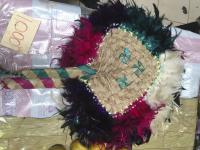
naligaj
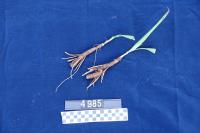
n. herb to 10 cm, sterile (collection: Michael J. Balick #4985)
Example: This plant is a very important food during a famine. People dig up the roots and roast these on the embers of a fire for 25 minutes, then check the root to get out the starchy material, and spit out the fiber. There is said to be little taste; this is a bland food that a person eats to survive. People on Aneityum have harvested it for a very long time so there is not as much of a supply left as in the past.
bookmarknamesei
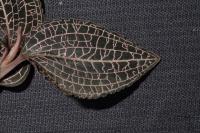
namniañia
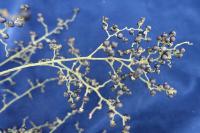
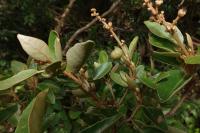
nanedauyan
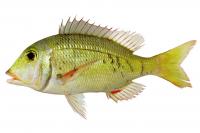
n. Pacific yellowtail emperor
Example: Photo by Jeffrey T. Williams / Smithsonian Institution, License: CC BY-SA 3.0 via Fishes of Australia
bookmarknapauwa
n. kind of taro
bookmarknapjis
n. a species of grass
bookmarknapun nitai caig
n. the skin or rind of food
bookmarknarahcai
n. a table made of reeds, for drying arrowroot, etc.
bookmarknarecheno
n. kind of plant, grass, or fern
bookmarknared
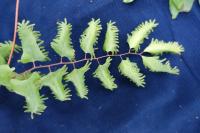
n. vine to 3 m, sori brown. (collection: Michael J. Balick #4930)
Example: Take a handful of the vine, twist it into rope with many stems of the vine, and use it to tie bundles of sugar cane. It can also be used to tie wild canes (Miscanthus) to the roof of the house. Take a handful of the vine, twist it into rope with many stems of the vine, and use it to tie bundles of sugar cane. It can also be used to tie wild canes (Miscanthus) to the roof of the house.
bookmarknasjiñaho
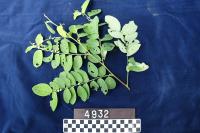
nau
n. bamboo; a mountain
bookmarknau-hos
n. bamboo to 5 m, sterile. (collection: Michael J. Balick #4940)
Example: Used to build walls of local houses. The outer skin is stripped off, stems cut in half then smashed flat, the inside is stripped clean and woven into walls. The cut pieces of entire stems can be filled with food and used for cooking that food. Cover both ends with leaves and cook. If a person has skin that becomes infected, use sharpened stem as a local knife to remove the infected area of skin. Use as a local water pipe to move water from one place to another (nobol). Either split the stem in half or punch the nodes out throughout the entire tube and use as a pipe.
bookmarknauincai
n. tree
bookmarknecñanman
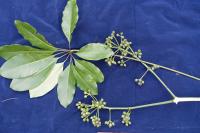
nehtet upaipai
n. kind of sugarcane
bookmark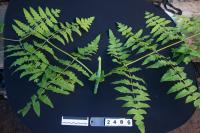
nelnjen
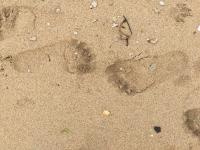
nemla
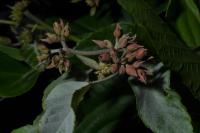
n. tree, 4 m tall (collection: Gregory M. Plunkett #4127)
Example: 1. This wood can be used to start a fire, where there are no matches. Two dried pieces of wood are rubbed vigorously together to create tinder. The tinder is then added to dried material in order to start a fire. 2. The wood of this plant is used as rafters in traditional houses.
bookmarknepilvan
n. tender shoots
bookmarknerin nujipsotan
n. blade, as of corn or grass
bookmarknetemu or nidwumnumu
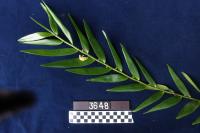
netit tidai
n. kind of plant, grass, or fern
bookmarkniducai
n. kind of tree
bookmark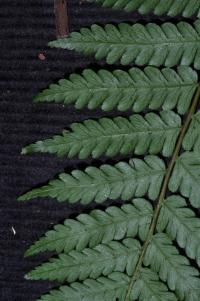
nijhinga
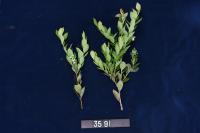
n. shrub, 1-1. 25 m tall (collection: Gregory M. Plunkett #3591)
Example: The fruits of this species are edible when ripe (black) and are very sweet. It grows in the white grass area in the open. It is "numba one" fruit. If a person eats a lot of these it turns their tongue reddish-purple.
bookmarknijinga
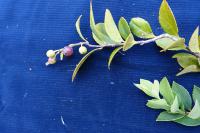
n. shrub to 2 m, flowers blue-purple. Red clay soil (collection: Michael J. Balick #4878)
Example: A stem of this shrub is sharpened and used to dig a hole for planting kava. When a person plants kava in a hole made from this stick, there is the belief that it will make kava root stems strong and large. The fruits are edible when ripe and said to be sweet.
bookmarknijkowai
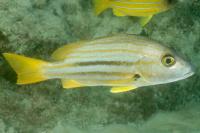
n. Spanish flag, stripey
Example: Photo by Ian Shaw / iNaturalist.org, License: CC BY-NC 3.0 via Fishes of Australia
bookmarknirak
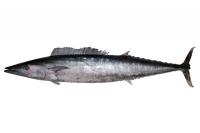
nisbähäin
n. Dracaena angustifolia
Example: Leaf: cold maceration, emetic, taken internally against ciguatera poison
bookmarkniseaig
n. kind of tree
bookmarknititan
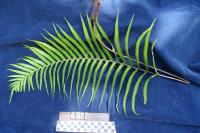
n. fern to 0. 75 m, sori brown. growing along trail. (collection: Michael J. Balick #4972)
Example: The fronds of this fern are used to wrap sting ray and shark meat, which have a great deal of moisture in them, for cooking on the earth overn. Wrap the fronds (leaves) around the meat and tie with a Pandanus string. Because they are not thick, broad, entire leaves, but rather have many places in them where water can drain out during the cooking process, it is said that these leaves are much better for preparing these two types of fish, as well as any other meat that contains a great deal of moisture. For cooking on the earth over, put these wrapped foods on top of any other leaves so that they do not touch the hot stones directly, and then cover with other leaves as well. Then place the hot stones on top of these wrapped meats.
bookmarknodieg
n. a bundle of reeds; also "nohudieg"
bookmarknohoan
n. fruit; also "nohwan"
bookmark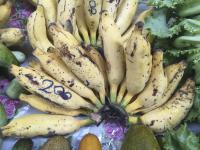
nowyeyang
n. shrub to 2 m tall, flowers pink (collection: Michael J. Balick #4955)
Example: The tubers of this variety are sweet, not bitter and are eaten after cooking. The young leaves are eaten after boiling in water until they are soft, either plain or cooked in soup. It is important to only harvest and prepare the young leaves in this way, as the older leaves will not get soft even after cooking. The young leaves are used to cover the top layer of the earth oven, on top of the stones that comprise the upper layer of the earth oven.
bookmarknuhialeg upni
nuhihialeg
n. the early morning
bookmarknuputreiki
n. kind of tree
bookmarkpok
adv. seaward
bookmarktatalaha
n. kind of taro
bookmarktatau
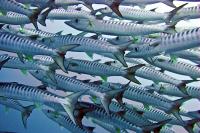
n. Blackfin barracuda
Example: Photo by Jan Messersmith, License: CC BY-SA 3.0 via Fishes of Australia
bookmarkyatit
n. kind of banana
bookmarkyetse
v.n. to go down
bookmarkThere are currently 2431 entries, 1543 audio files, and 860 images.
All content copyright © Aneityum community. (2015)
Talking Dictionary produced by K. David Harrison, Gregory D. S. Anderson and Jeremy Fahringer. Botanical consultants: Michael J. Balick, Gregory M. Plunkett and Sean Thackurdeen. (2015-2018)
Aneityum language contributors include Kirk Keitadi, Tony Keith, Titiya Lalep, David Nasauman, Osiani Nerian, Ruben Nerian, Chris Nevehev, Romario Yaufati and others as credited within the dictionary entries. Based in part on materials from Inglis, John (1882) A Dictionary of the Aneityumese Language: In Two Parts. I. Aneityumese and English. II. English.
The Aneityum-English Talking Dictionary was made possible by award no. 1555675 from National Science Foundation for “Collaborative Research: Plant, Fungal and Linguistic Diversity of Tafea Province, Vanuatu.” This support is gratefully acknowledged.
Any opinions, findings, and conclusions or recommendations expressed in this material are those of the author(s) and do not necessarily reflect the views of the National Science Foundation.
All rights reserved. Do not distribute or reproduce without permission.
how to cite:
K. David Harrison. 2015.
Aneityum Talking Dictionary.
Swarthmore College.
http://www.talkingdictionary.org/aneityum
Interface and database design under the direction of Jeremy Fahringer and Swarthmore College ITS.
Supported by