
An example search has returned 100 entries
achachadaliek
adj. tempestuous at sea
bookmarkededel
n. spring
bookmarkigcahi
n. landward
bookmarkijmau
n. without branches
bookmarkincei u nasuantan
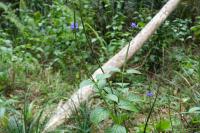
n. herb to 1 m, flowers blue. In transitional zone from pine forest to ’primary’ forest. (collection: Michael J. Balick #4982)
Example: This is used to treat Ciguatera disease when a person eats fish that is contaminated. Squeeze juice from a handful of leaves of this herb into a cup, add a small amount of water, and drink 1 cup once a day for 3 days, or continue until the person feels better. This illness is a problem on Aneityum with the reef fish. It is better to eat fish that are farther out to sea. This treatment is also used for dogs who eat contaminated fish. Make the same preparation and forcibly pour this in their mouth as they will not drink it willingly. Do this treatment once daily until the dog feels better. The dogs get this illness because they are fed the scraps, especially the bones of the fish, and this is thought to be where the disease is found. This is considered to be a dangerous illness and dogs who get it frequently die.
bookmarkinlopotjap
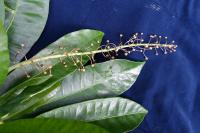
n. shrub to 1 m, fruits green. Secondary forest. (collection: Michael J. Balick #4897)
Example: The leaves are used for compost in the taro patch. Dig a hole, line it with the leaves of this species, cove with earth and plant taro. The leaves of this species are used to cover earth ovens.
bookmarkinloptiri
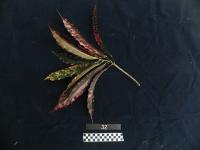
n. shrub. Found in the village Unames. (collection: Ashley A McGuigan #32)
Example: 1. To cure when the anus falls out - Pound together 1 braches worth of inpalcapnesgin leaves and of both inloptiri (2-4 leaves, any age), also take the inner bark of nekeaitimi and nakhe. Put this into your hand, or another leaf and give it to the person to use it. This should be applied to the anus whenever the anus comes out. USed to use a clam shell to extract the bark but not anymore.
bookmarkinlop̃otjap
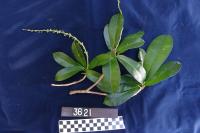
inmac
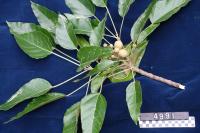
n. tree to 10 m, dbh 1 m (collection: Michael J. Balick #4991)
Example: The young trees are a good source of lumber as they are straight and can be used as poles or sawn timber. This tree is also a source of firewood and is known to be easy to light and burns well. The fruits are a source of oil. Collect the ripe fruits, remove the seeds from the shell, macerate the seeds to release the white endosperm inside, place this in a pot without water and heat it. The brown-yellow oil will come out from the crushed fruits. It is good for using on the body but not edible. It is a good massage oil, or to lubricate the skin or to heal small wounds. For the latter, drop some oil on the wound once daily until the wound heals.
bookmarkinmayinpak
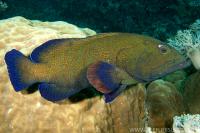
n. Peacock hind
Example: Photo by Andrew J. Green / Reef Life Survey, License: CC BY-A 3.0 via Fishes of Australia
bookmarkinmohoc onubidou
intelopse
n. kind of plant, grass, or fern
bookmarkintesjao
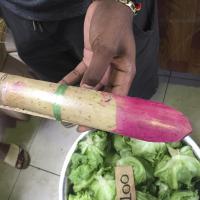
intisian
n. a flower
bookmarkintop̃asiej
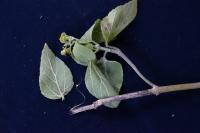
n. shrub, 0. 7 m tall (collection: Gregory M. Plunkett #3562)
Example: In the past the ancestors learned to cook the leaves of this species with fish in an earth over and then eat the leaves as well as the fish. Today, fish are wrapped with small leaves and then covered with lap-lap leaf (Polyscias) and cooked in an earth oven. This plant is also a "calendar plant." When you see this plant flower you know that sea turtles are getting fat and ready to harvest. As a "message plant", if a person puts this flower behind their ear or in their hat, and looks at another person, it is an invitation to that person to go with you to the nakamal for kava
bookmarkintop̃asiej ura
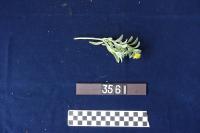
n. stoloniferous herb, 15 cm tall (collection: Gregory M. Plunkett #3561)
Example: In the past the ancestors learned to cook the leaves of this species with fish in an earth over and then eat the leaves as well as the fish. Today, fish are wrapped with small leaves and then covered with lap-lap leaf (Polyscias) and cooked in an earth oven.
bookmarkinwai
n. kind of sugarcane
bookmarkinwai
n. water; fresh water
bookmarkinwaimeteuc
n. sweet potato
bookmarkinwoapeñ
inyehec
n. mandrake
bookmarkjigkom
[ʧiŋkum] n. chewing gum
bookmarknagedauyag
n. kind of taro
bookmarknahaijcai
n. kind of plant, grass, or fern
bookmarknaheñ
naheñ
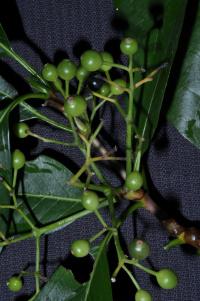
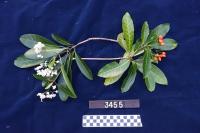
n. tree, 4 m tall (collection: Gregory M. Plunkett #4066)
Example: 1. Young saplings are used to prepare a fishing spear. First a straight sapling is chosen and sized. Then it is heated over a fire to render it pliable. After the length is straightened, it is decorticated. Once cooled, a portion of wire can be affixed to an end to aid in spearing fish.
bookmarknairek
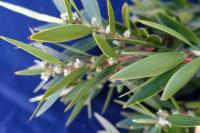
nakoai
n. species of palm tree
bookmarknalad iran
n. seed of a fig
bookmarknalmupeñ
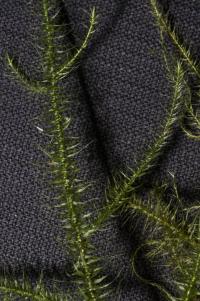
namakapasi
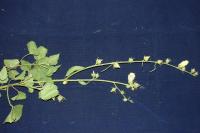
napalhat
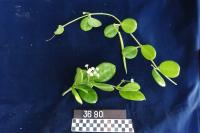
n. vine, growing on rocks at end of strand near coastal forest. (collection: Gregory M. Plunkett #3690)
Example: As a medicine to treat toothache, the latex from this vine is put into the tooth as soon as the person feels pain. Use 3x daily until the pain has subsided. The flower is used as a decoration behind the ear. When there are rough seas because someone has trespassed in a tabu area you can take 12 leaves from the napalhat and put them in a pond for about 1 week until they start to stink. Then use we leaves from the naojapdak and drown those leaves in either a fresh water pond or salty water. (No further information given). Can also take an armful of napalhat and place on top of a stone in the tabu area with a smaller stone on top of the napaphat. The stone must be a large permanent stone. Has also heard people say it can be used for toothache if you put the leaf on the tooth.
bookmarknapisinijvaig
n. kind of sugarcane
bookmark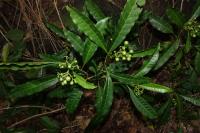
nap̃at
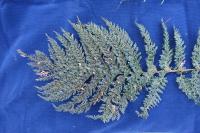
n. terrestrial fern, growing in dwarf cloud-forest. (collection: Gregory M. Plunkett #3268)
Example: For performing a weather magic ritual to produce fog, this plant is fermented along with another plant (nirid u numu) in a hole in a sacred stone (called "Naemoso") at a secret location on Aneityum.
bookmarknarasincai
n. bark
bookmarknarijo
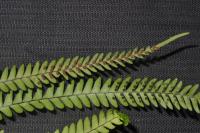
n. epiphytic fern on decaying log, growing in dense rainforest. (collection: Gregory M. Plunkett #4088)
Example: 1. Considered the same as Narijo. When it grow in good soil it takes the form of GMP 4087. In cold and rocky soil it this form.
bookmarknatuun
n. kind of banana
bookmarknau-hos
n. bamboo to 5 m, sterile. (collection: Michael J. Balick #4940)
Example: Used to build walls of local houses. The outer skin is stripped off, stems cut in half then smashed flat, the inside is stripped clean and woven into walls. The cut pieces of entire stems can be filled with food and used for cooking that food. Cover both ends with leaves and cook. If a person has skin that becomes infected, use sharpened stem as a local knife to remove the infected area of skin. Use as a local water pipe to move water from one place to another (nobol). Either split the stem in half or punch the nodes out throughout the entire tube and use as a pipe.
bookmarknaupiñiña
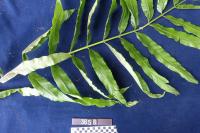
n. terrestrial fern, growing in secondary forest along the river. Leaves c. 2. 25 m long. (collection: Gregory M. Plunkett #3656)
Example: Put several leaves of this species together to wrap food, especially the fresh water eel, and to carry plants of taro, kava, holding the leaves over one’s shoulder to carry these crops.
bookmarknausakrai
n. thorn
bookmarknaytmas
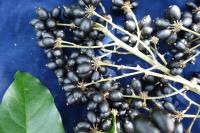
n. tree to 5 m, dbh 4 cm (collection: Michael J. Balick #4898)
Example: The leaves are used to cover goat or pig meat when a person is roasting it on an earth oven It prevents it from burning and enhances the taste of the meat.
bookmarknecñopod cap
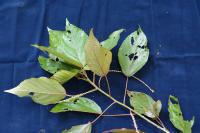
n. shrub to 2. 5 m tall, 1 cm dbh (collection: Michael J. Balick #4856)
Example: When a person gets burned by a fire, take the leaves, squeeze sap on the burn, and then rub a handful of leaves on the burn; use a larger amount of leaves if the person has a larger burn. Apply it directly after the person is burned. This treatment will stop the burn from blistering. Use once. When a 1 month to 2 year old baby has redness or sores on their tongue and cannot eat properly, and saliva is coming out from their mouth, take the sap of the crushed leaves in a spoon and give it to the baby. Take one teaspoon for a 1-5 month old child and a tablespoon for a 6-24 month old. Give the baby once a day for 2 days. This treatment cleanses out the reddish sores. If a person has a sore that is persistent and stays red and sore for a week or more, take 4 apices of this plant, chew and spit on the sore to help it heal. Use 1x in the morning, and next day in the afternoon. Use 2x only. If a person is walking in the bush and concerned about evil spirits, put a small branch behind the ear to be safe. To treat hot chest pain, dizziness, shortage of breath, and if a person has a hot pain that does not go away after taking panadol (aspirin), take 8 leaves and squeeze into a glass of water until it turns reddish, drink 1x a day for 3 days; this is said to make the pain go away.
bookmarknefesgamtan
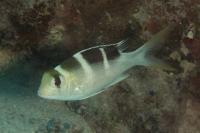
n. Humpnose big-eye bream
Example: Photo by Mark Rosenstein / iNaturalist.org, License: CC BY-SA 3.0 via Fishes of Australia
bookmarknegainohos
n. bunch of bananas; also "nigainohos"
bookmarknehel
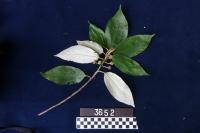
nejeg
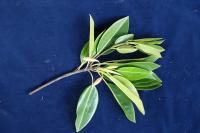
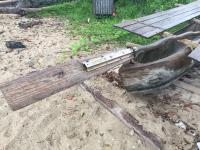
n. tree, growing in forest at edge of wide tidal stream (collection: Gregory M. Plunkett #3535)
Example: 1. The wood is strong and good to make house posts. People use these for this purpose on the coast as salt water does not bother this wood. 2. People eat fruit, split fruit in half, carefully scrape the inner part into a pot of water, keep over night – next day rinse, fry or cook with coconut milk and can add tinned tuna for example, very hard work.
bookmarknelas
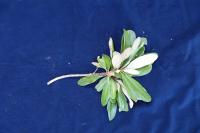
nelda
n. kind of plant, grass, or fern
bookmarknepilvan
n. tender shoots
bookmark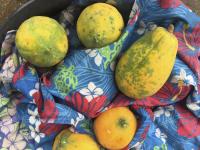
nete o un
n. west
bookmarknicvan neaig
n. kind of taro
bookmarknihpad
n. kind of tree
bookmarknijmese
n. green foliage
bookmarknilpodou
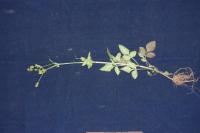
n. herb, growing at edge of garden area. Flowers yellow. (collection: Gregory M. Plunkett #3599)
Example: This is for a medicinal tea to give energy to a person who is not feeling well. Collect a handful of young stem apices and boil in 2-3 cups of water. Drink warm to help the body be strong and healthy. It is also good to treat diarrhea. When a person feels well again, stop this treatment but they can also drink this 1x daily, once before breakfast or before lunch, as a healthful tea.
bookmarknisjin
n. shoots of plants of bananas
bookmarknohon
n. kind of taro
bookmarknohos aiyu
n. the sweet banana
bookmarknohos anhas
n. the Futuna banana
bookmarknumuyehec
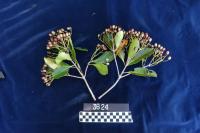
nähäwanatschill
n. Macaranga dioca
Example: Inner bark: bathe in cold infusion, wounds. Mix heated over fire and taken out during sunset. Healer clenches the package in his fist, then gently punches the patients left, then right knee, then his forehead and finally squeezes over his head, migraine a
bookmarkohod
n. bundle of leaves, as of nasiaij
bookmarkpak
adj. unripe
bookmarkse
adv. downward
bookmarksiki
adv. down there, at a short distance; also "sike"
bookmarktabake
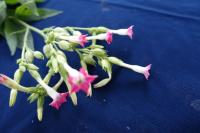
n. herb 1 m tall, flowers pink (collection: Michael J. Balick #4923)
Example: Collect the yellow leaves, the mature ones, roll it between one’s hands, squeezing it, and dry it in the sun for a day and hang it in the kitchen near the place where fires are made, and within a week it will turn black. It is ready to be smoked--roll paper around it and smoke it. Take 6-10 leaves, roll them up and squeeze them into a bucket of water mixing the juice with the water until it turns somewhat green. Use this water to wash crops such as legumes and other garden plants to kill insects that might be attacking them.
bookmarktatalaha
n. kind of taro
bookmark
uvid
n. three days ago; three days hence
bookmarkweite
adj. perennial (applied to water); also "etweite", "inweite"
bookmarkThere are currently 2431 entries, 1543 audio files, and 860 images.
All content copyright © Aneityum community. (2015)
Talking Dictionary produced by K. David Harrison, Gregory D. S. Anderson and Jeremy Fahringer. Botanical consultants: Michael J. Balick, Gregory M. Plunkett and Sean Thackurdeen. (2015-2018)
Aneityum language contributors include Kirk Keitadi, Tony Keith, Titiya Lalep, David Nasauman, Osiani Nerian, Ruben Nerian, Chris Nevehev, Romario Yaufati and others as credited within the dictionary entries. Based in part on materials from Inglis, John (1882) A Dictionary of the Aneityumese Language: In Two Parts. I. Aneityumese and English. II. English.
The Aneityum-English Talking Dictionary was made possible by award no. 1555675 from National Science Foundation for “Collaborative Research: Plant, Fungal and Linguistic Diversity of Tafea Province, Vanuatu.” This support is gratefully acknowledged.
Any opinions, findings, and conclusions or recommendations expressed in this material are those of the author(s) and do not necessarily reflect the views of the National Science Foundation.
All rights reserved. Do not distribute or reproduce without permission.
how to cite:
K. David Harrison. 2015.
Aneityum Talking Dictionary.
Swarthmore College.
http://www.talkingdictionary.org/aneityum
Interface and database design under the direction of Jeremy Fahringer and Swarthmore College ITS.
Supported by